


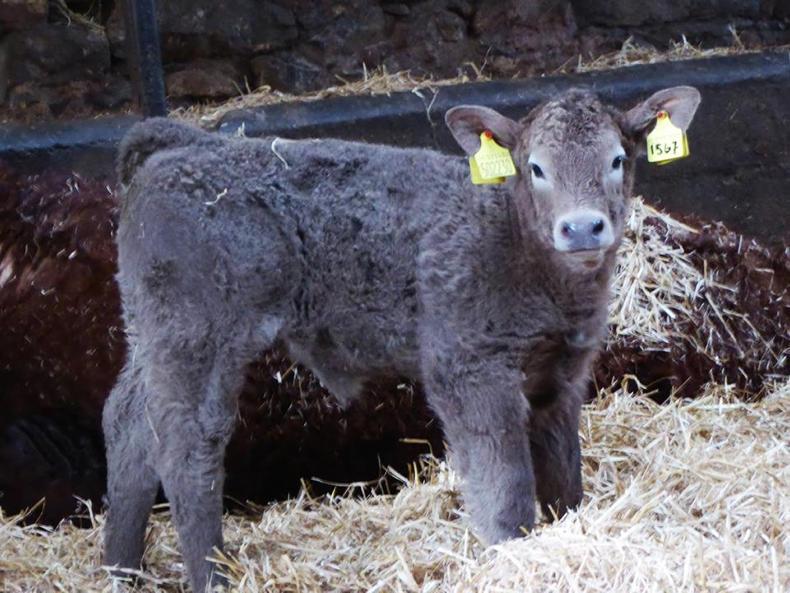
1 The cow
If cows have had a hard calving, make sure they receive anti-inflammatory medication.
This can reduce swelling (pain), increase appetite and let the cow focus on nursing the calf.
Also, with some cows in strong condition, it is worth being mindful that extra fat in the pelvis can slow up calving.
Make sure protein is optimal in the pre-calving diet. A good diet with energy and protein for the last three weeks can greatly help colostrum quality.
Have plenty of fresh water available for the freshly calved cow in calving pens.
I am a big fan of feeding soybean meal 0.5-0.75kg per cow per day for two to three weeks before calving.
Ensure there is sufficient magnesium in the pre-calving diet at 0.4% DMI – about 40g per cow/day.
2 Space and hygiene
The suckler cow coming up to calving benefits from space and a clean bed.
Space allows less bullying, particularly with heifers introduced into a group. It can be better to calve heifers in a group on their own.
Have plenty of fresh bedding in calving pens. Straw is still a lot cheaper than a call from your vet.
Soak the newborn navel in iodine 10% or chlorhexidine 0.5%. Having a lie-off area for suck calves to go with a deep fresh bed of straw can make a big difference also.
To reduce lameness and mastitis, bed down regularly and scrape passages twice daily, especially during mild weather with stock indoors.
4 Safety at calving
The suckler cow at calving can be very unpredictable.
There are a lot of hormones flying and maternal protective instincts make these animals potentially the most dangerous on the farm.
When handling them have a good head gate and always keep a gate between you and the cow until they are restrained.
Cows have sensitive hearing and can be easily spooked around calving with loud noises. So, calm and quiet works best.
3 Minerals
Having sufficient magnesium pre-calving to avoid milk fever is key.
Selenium and iodine can cause issues with calf health and sometimes retained cleanings.
While copper can also play a role in immunity in the cow, it is complicated by the fact that it can be locked up by minerals such as molybdenum.
With any weak or stillborn calves, iodine and selenium should be considered and investigated.
5 Colostrum
The suckler calf gets vital immunity from the first milk. We want a calf to get up and suckle within 15 to 30 minutes and drink 2-3 litres of good-quality colostrum.
Ensuring a good energy and protein-rich diet pre-calving really helps with colostrum quality.
Any calf that has had a hard calving and isn’t standing within 30 minutes should receive a painkiller and be tube-fed 3 litres of warm colostrum.
The ideal is to milk out the cow but you need good handling facilities. Where borrowing colostrum from neighbouring dairy farms, always test quality and make sure the herd is Johne’s disease-free.
Always clean teats before milking out cows to reduce contamination of colostrum.
Dung getting into colostrum is never good. If calf health issues are occurring every year, the first area to focus on this spring is colostrum management.
You can blood test calves between two to seven days to check for passive transfer or sufficient levels of immunity.
6 Calf jackets
Having four to five calf jackets on your farm can be a very good investment this spring.
Put them on any weak calves, or a calf that has had a hard calving.
For any smaller weak calves outside they are a great nursing aid. Any sick calf can also benefit from this extra layer of heat and warmth.
Farmers who follow my advice to try calf jackets for these purposes always end up buying more.
Be careful to hot wash them between calves. The good ones cost between €25 and €35.
7 Calf pneumonia
Firstly we want to spot symptoms early for best treatments, regularly walking through young calves.
Look for ear drops, nasal discharges, breathing difficulties, coughing and always have a thermometer at hand.
A temperature of over 39°C will always make us worried something is happening, most likely an infection in lungs or airways.
Most of the pneumonia we see in our suckler herds is viral and bacterial.
The main viruses in calves under two months tend to be RSV and PI3, with IBR often being a challenge for older calves.
With reoccurring pneumonia issues, vaccination can help. In young calves, intranasal vaccines are a good option but must be handled carefully and ideally given to healthy calves before the risk period.
Where pneumonia is a constant issue, look at ventilation and housing first. Fresh air can prevent a lot of problems and it must be maximised.
Every case of pneumonia greatly benefits from anti-inflammatory medication at the start of treatment along with antibiotics if necessary.
9 Calf scour
Watch out for calf scour in the first weeks of life. Try also to find out what is causing it.
Have good-quality electrolytes on hand for any calf and get in early with them. Early fluid treatments work best – it is critical to keep the calf hydrated.
It is also important to keep the calf on the mother. Milk will speed up the recovery of the damaged gut.
Early rapid rehydration with 2 litres of warm electrolyte solution twice daily and keeping the calf suckling gives a much better chance of avoiding calves going down.
There is quite a bit of science to picking the right electrolyte.
Always try to get something that will hydrate the calf and also reverse acidosis. Calves with scour can get cold so I find calf jackets work well to keep them warm while being treated.
8 Grass tetany
With cows going out early, be mindful of cases of grass tetany. This is a very acute disease caused by low magnesium.
It leads to cows going down in nervous tremors and dying in eight to 12 hours. Pasture that has had slurry or nitrogen spread on it in preceding weeks will increase the risk as they lock up magnesium.
Also, lush grass, while rich in protein and energy, may pass quickly through the cow leading to lower levels of magnesium being absorbed.
The calved cow has a bigger requirement for magnesium and also doesn’t store it well, meaning it needs daily intakes.
So bad weather outdoors in the spring can mean us being very mindful about intakes and watching for grass tetany.
Make sure there is sufficient magnesium in any nuts fed. This is a great way of getting magnesium into cows. It also means cows get more energy for milk production and maintaining BCS. If you see very loose dung on fresh grass, buffer feed with hay or silage in a ring feeder to slow down gut passage.
Where grazing high-risk ground with high potassium, magnesium boluses are a good but expensive option.
High-magnesium licks are OK but have variable intakes. Still, they are better than nothing.
Always have a few bottles of calcium and magnesium in the drugs press. Any cow with nervous symptoms or down can be given one of each while waiting for your vet to assess them.
10 Watching stock
Nothing beats vigilance in the spring. Make walking through all stock twice daily part of your routine.
Spotting symptoms early can make all the difference.



SHARING OPTIONS